





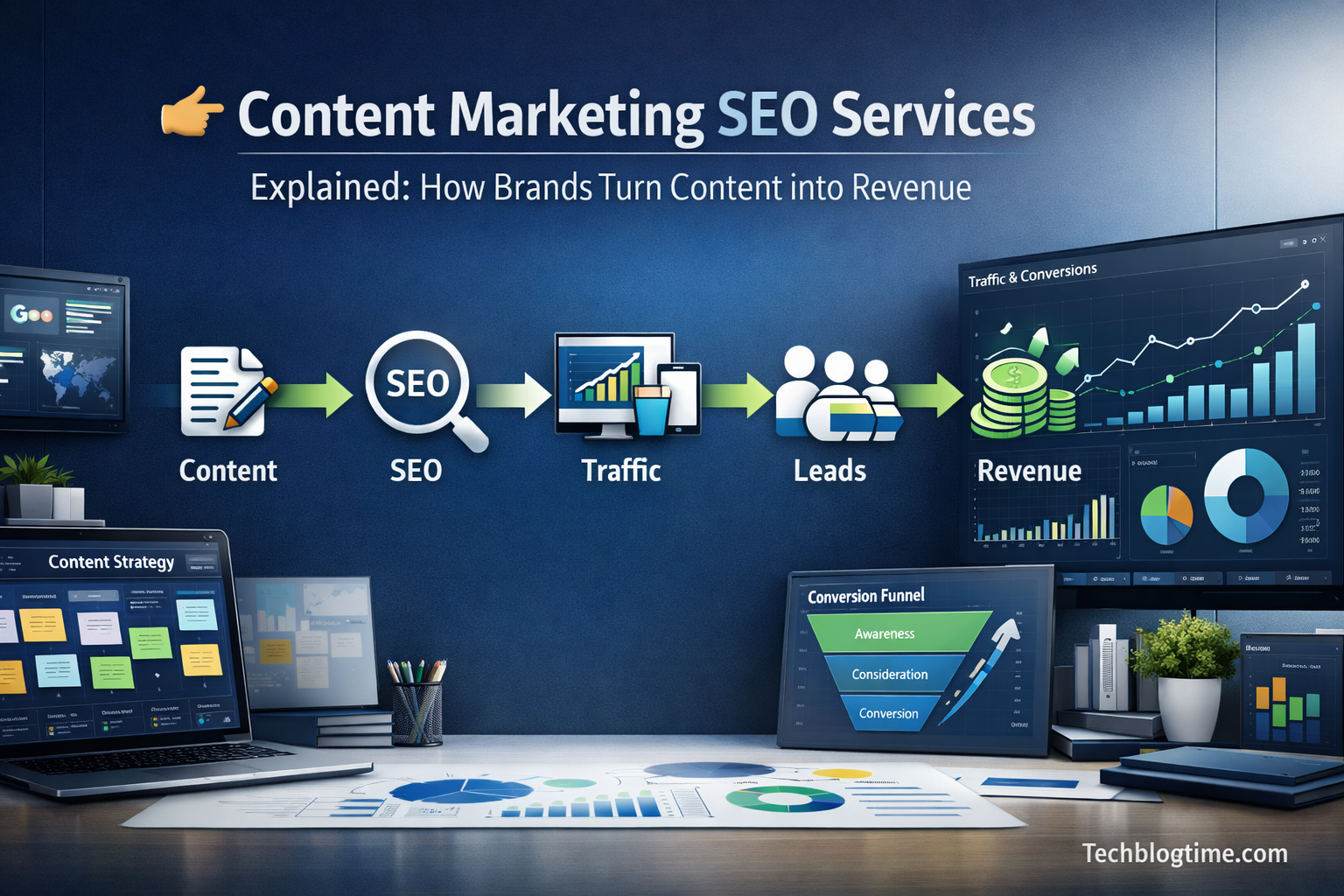
In today’s digital economy, content is no longer just a branding tool — it is a revenue engine. Businesses that once relied only on ads and cold outreach are now building scalable, long-term growth systems through Content Marketing SEO Services. This powerful combination of strategic content creation and search engine optimization allows brands to attract the right audience, build trust, and convert attention into income. Unlike short-term marketing tactics, content-driven SEO creates compounding growth: each article, page, and asset becomes a digital investment that continues generating traffic and leads over time.
Modern consumers don’t want to be sold to — they want to be informed, educated, and empowered. They search for answers, solutions, and guidance before making decisions. Content marketing SEO services position brands exactly where customers are looking, at the moment of intent. When done correctly, this strategy transforms blogs, guides, landing pages, and educational content into sales pipelines that work 24/7. This article explores how brands turn content into revenue using structured, data-driven, and human-focused SEO content strategies.
Understanding Content Marketing SEO Services
Content Marketing SEO Services are not just about writing blog posts and inserting keywords. They are a systematic growth strategy that aligns content creation with search behavior, user intent, and conversion psychology. At its core, this approach integrates high-quality content with technical SEO, keyword strategy, user experience, and funnel optimization to drive both visibility and profitability.
Traditional SEO focuses on rankings. Traditional content marketing focuses on storytelling and engagement. Content marketing SEO services unify both. This means content is not created for algorithms alone — it is created for humans first, search engines second. Every piece of content serves a purpose: attracting traffic, building authority, nurturing trust, or driving conversions.
This strategy includes search intent mapping, content architecture planning, topical authority development, internal linking structures, content funnels, and performance optimization. Brands no longer publish content randomly — they build content ecosystems where every article supports another, creating relevance, authority, and trust signals for both users and search engines. The result is sustainable organic growth that doesn’t depend on constant ad spend.
Why Content Marketing SEO Services Are a Revenue System, Not Just a Traffic Strategy
Traffic without strategy is noise. Revenue comes from qualified attention, not just visitors. Content marketing SEO services focus on buyer-intent alignment, meaning content is built around real problems, real needs, and real decision-making processes.
Top-performing brands use content to guide users through the customer journey:
- Awareness stage: educational content attracts curiosity-driven searches
- Consideration stage: comparison and solution-based content builds trust
- Decision stage: service pages and conversion content drive action
Each stage is connected. A blog post leads to a guide. A guide leads to a service page. A service page leads to a consultation or purchase. This structure turns content into a sales funnel, not just a marketing asset.
Revenue-driven SEO content is also scalable. Paid ads stop when budgets stop. SEO content compounds. A single high-performing article can generate thousands of visitors per month for years. Over time, this creates customer acquisition systems that lower marketing costs while increasing conversion quality. Brands that invest in content marketing SEO services are not chasing clicks — they are building digital infrastructure that produces predictable revenue.
Search Intent Mapping: The Foundation of Profitable Content
One of the most powerful aspects of content marketing SEO services is search intent mapping. Not all keywords are equal. Some represent curiosity. Some represent research. Some represent buying intent. Revenue-focused SEO strategies classify and structure content around intent categories:
- Informational intent (learning and education)
- Commercial intent (comparison and evaluation)
- Transactional intent (purchase and action)
- Navigational intent (brand and trust searches)
By mapping content to intent, brands create content funnels instead of content libraries. Informational content attracts traffic. Commercial content nurtures leads. Transactional content converts customers. This structure prevents wasted traffic and improves conversion rates.
When intent mapping is done correctly, content becomes a guided journey rather than disconnected pages. Users naturally flow from learning to trusting to buying. This psychological alignment is what transforms SEO from a visibility tactic into a revenue architecture.
Building Topical Authority Through Strategic Content Clusters
Search engines reward topical authority, not just keywords. Content marketing SEO services focus on building authority clusters instead of isolated pages. This means creating interconnected content ecosystems around core topics, services, and industries.
For example, instead of writing one article about SEO services, brands create structured clusters:
- Core pillar page (main topic)
- Supporting blog posts (subtopics)
- Guides and resources
- FAQs and knowledge content
- Service pages
- Case studies
This structure sends strong trust signals to search engines and users. It positions the brand as a subject-matter authority, not just a content publisher. Authority builds rankings. Rankings build traffic. Traffic builds trust. Trust builds revenue.
Topical authority also improves conversion quality. Users who consume multiple related content pieces develop brand familiarity and psychological trust, making them more likely to convert. This is how content becomes a relationship-building system, not just a ranking tool.
Conversion-Focused Content Design and User Experience
Great content alone doesn’t convert — structure does. Content marketing SEO services integrate conversion psychology into content design. This includes layout optimization, CTA placement, trust signals, reading flow, and user experience architecture.
Human attention is limited. Content must guide users naturally:
- Clear headings
- Logical structure
- Scannable formatting
- Strategic CTAs
- Trust indicators
- Proof elements
- Social validation
- Authority positioning
Revenue-focused content uses emotional triggers: clarity, credibility, relevance, and simplicity. It answers questions before they are asked. It removes friction. It builds confidence. It makes decisions easier.
SEO brings traffic. UX converts traffic. Content marketing SEO services bridge this gap by aligning content structure with human behavior patterns. The result is higher dwell time, lower bounce rates, stronger engagement, and higher conversion rates.
Data-Driven Optimization and Performance Scaling
Content marketing SEO services are not static. They are living systems. Data analysis plays a critical role in turning content into revenue. Brands track:
- Keyword performance
- Search visibility
- Engagement metrics
- Conversion paths
- Funnel drop-offs
- Lead quality
- Revenue attribution
This data allows continuous optimization. Low-performing content is improved. High-performing content is scaled. Winning topics are expanded. Conversion paths are refined. Funnels are strengthened.
This creates a feedback loop:
Data → Optimization → Growth → Revenue → Scale
Over time, content becomes more efficient, more targeted, and more profitable. Brands stop guessing and start engineering growth using measurable performance systems.
Brand Trust, Authority, and Long-Term Market Positioning
Revenue is not just transactional — it’s relational. Content marketing SEO services build brand trust over time. Educational content positions brands as helpful, not pushy. Authority content positions brands as experts. Consistent visibility builds familiarity. Familiarity builds trust.
Trust reduces buying resistance. It shortens sales cycles. It increases lifetime value. It strengthens brand loyalty. Content-driven brands don’t compete only on price — they compete on perceived value.
This is how brands move from vendors to authorities. From service providers to market leaders. From competitors to category owners.
How Brands Turn Content into Predictable Revenue Streams
Successful brands treat content as infrastructure, not campaigns. They build systems:
- SEO funnels
- Content pipelines
- Authority hubs
- Lead generation engines
- Trust-building ecosystems
- Conversion architectures
Each piece of content serves a business function. Blogs attract. Guides nurture. Pages convert. Case studies close. Resources retain. This creates predictable revenue pipelines driven by organic search.
Unlike paid traffic, SEO content creates long-term stability. Brands are not dependent on platforms, algorithms, or ad budgets. They own their traffic, their audience, and their digital assets.
Future of Content Marketing SEO Services
The future of content marketing SEO services lies in intent intelligence, AI-assisted optimization, personalization, and authority ecosystems. Search engines are becoming smarter. Users are becoming more selective. Generic content will disappear. Value-driven content will dominate.
Brands that win will be those who:
- Understand human psychology
- Build trust before selling
- Educate before converting
- Create value before monetization
- Structure before scaling
SEO will no longer be about rankings alone — it will be about relevance, trust, and experience.
Conclusion: Content as a Revenue Engine
Content Marketing SEO Services are no longer optional — they are foundational. They transform marketing from interruption-based tactics into value-based systems. They turn websites into digital sales machines. They convert attention into trust. Trust into relationships. Relationships into revenue.
Brands that master this strategy don’t chase customers — customers find them. They don’t compete for clicks — they own mindshare. They don’t depend on ads — they build assets. They don’t focus on traffic — they focus on growth systems.
In a digital world driven by trust, relevance, and authority, content is the currency. SEO is the distribution system. And revenue is the natural result of value delivered at scale.
If your brand wants sustainable growth, predictable leads, and long-term digital dominance, Content Marketing SEO Services are not just a strategy — they are the future of business growth.