



The world of online sports streaming has always moved fast, but by 2026 it feels like it’s in constant overdrive. Platforms appear, vanish, rebrand, and resurface in new forms as fans look for easier ways to watch live games without being locked into expensive subscriptions. In that landscape, Crackstreams2.0 has become a familiar name again. For many users, it represents a continuation of a long-running underground tradition—free access to live sports, from boxing and MMA to football, basketball, and beyond.
But Crackstreams2.0 in 2026 is not the same site people remember from years ago. The design has changed, the way streams are organized feels more modern, and the overall experience reflects both the growing demand for live content and the pressure these platforms face from copyright enforcement and cybersecurity threats. Some users see it as “better than ever,” while others feel it has become more cluttered, riskier, and less reliable than in its early days.
This article takes a deep, human look at what Crackstreams2.0 is in 2026, what’s genuinely new, what has quietly changed, and what that means for everyday users. Rather than glorifying or condemning the platform, the goal is to explain how it works today, what people experience when they land on it, and how it fits into the wider streaming ecosystem. Whether you’re curious, cautious, or simply trying to understand why the name keeps trending, this guide will help you see the full picture.
The Evolution of Crackstreams2.0 Over Time
To understand Crackstreams2.0 in 2026, it helps to understand what came before. The original Crackstreams gained popularity years ago by offering quick links to live sports events with minimal friction. It became known for boxing and UFC events, but over time expanded into NBA, NFL, NHL, and even niche sports. When enforcement actions and domain shutdowns began happening more frequently, the platform fragmented. Clones, mirrors, and rebrands popped up, confusing users and diluting trust.
Crackstreams2.0 emerged as a response to that chaos. It wasn’t just a new domain—it was framed as a “reset,” a cleaner, more organized version meant to restore what fans liked about the original. By 2026, that identity has hardened. Crackstreams2.0 presents itself as the central hub in a scattered ecosystem, often appearing at the top of search results during major sporting events.
What’s changed most is the sense of permanence. Earlier versions of similar sites felt temporary, like pop-up tents that might disappear overnight. Crackstreams2.0 in 2026 feels more structured, almost like a full platform rather than a simple link page. It has categories, schedules, and event previews. Some pages look surprisingly polished, closer to a low-budget streaming service than a rough piracy hub.
At the same time, instability remains part of its DNA. Domains still change. Pages sometimes go dark during high-traffic events. Streams break or redirect without warning. The “2.0” branding suggests progress, but the platform still lives in a gray zone where longevity is never guaranteed. This tension—between looking more professional and remaining fundamentally fragile—is one of the defining characteristics of Crackstreams2.0 today.
Interface and Layout Changes in 2026
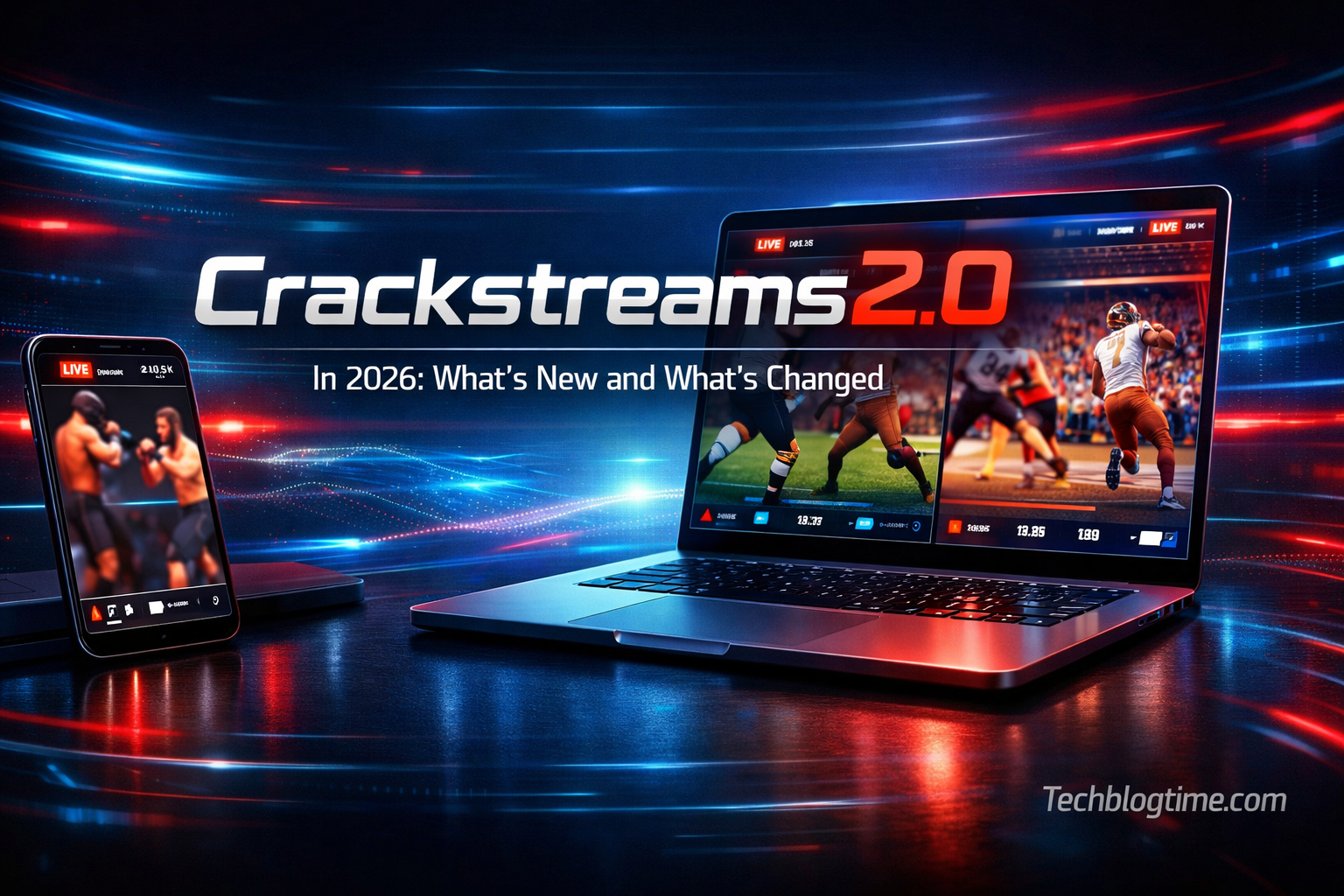
One of the first things users notice about Crackstreams2.0 in 2026 is how different it feels from older versions. The layout is cleaner, with a homepage that resembles a lightweight sports portal. Events are grouped by sport and date, often with countdown timers to upcoming games. This shift matters because it changes the emotional experience of using the site. Instead of feeling like you’re navigating a hidden corner of the internet, it can feel closer to browsing a legitimate schedule page.
Navigation has become more intuitive. Users can scroll through categories like “NBA,” “NFL,” “Boxing,” or “UFC” and immediately see what’s live or upcoming. Many pages now include simple thumbnails, team names, and event titles that mirror official broadcasts. For casual visitors, this reduces friction and confusion. You don’t need insider knowledge to find what you’re looking for.
However, this polish comes with trade-offs. The modern design relies more heavily on scripts, embedded ads, and external players. Pages load slower on older devices. Pop-ups are more aggressive than in earlier years. What looks like a smooth button may redirect you to a third-party page before finally landing on a stream. In other words, the interface feels better, but it also hides more layers beneath the surface.
In 2026, Crackstreams2.0 also adapts more aggressively to mobile users. The site resizes well on phones, with stacked menus and large tap targets. This reflects a broader trend: many users now watch games on mobile devices, not desktops. While this makes the site more accessible, it also increases exposure to intrusive ads and accidental clicks. A single tap can open a new tab, trigger a redirect, or prompt a misleading notification.
Overall, the interface changes make Crackstreams2.0 feel more like a “real” platform. But that sense of legitimacy can be misleading. Beneath the cleaner skin is the same unpredictable infrastructure that has always defined free streaming hubs.
Content Coverage and Sports Availability
In 2026, Crackstreams2.0 offers one of the broadest catalogs in the free-streaming space. Its strength remains combat sports—boxing and UFC events are prominently featured, often with multiple links per fight. On big pay-per-view nights, the homepage can feel like a dedicated fight portal, with each bout listed separately.
Beyond that, mainstream leagues dominate the schedule. NBA, NFL, NHL, and MLB games appear daily during their respective seasons. International football (soccer) has also expanded, with links for major European leagues, international tournaments, and high-profile matches. For many users, this breadth is the main appeal. Instead of jumping between multiple sites, Crackstreams2.0 acts as a central index.
What’s changed in 2026 is consistency. In earlier years, some sports felt like afterthoughts—listed, but rarely functional. Now, even smaller events often have at least one working stream. This suggests better sourcing and aggregation behind the scenes. The platform appears to pull from a wider network of hosts, increasing the odds that something works.
However, availability does not equal reliability. During peak events—Super Bowls, championship fights, playoff games—streams can lag, freeze, or disappear entirely. Traffic spikes overwhelm servers. Links that work an hour before kickoff may fail once millions of users arrive. This is a structural weakness that no cosmetic update can fully solve.
For users, the experience is a gamble. On a quiet weekday game, Crackstreams2.0 may feel smooth and almost “service-like.” On a massive night, it can become chaotic, filled with broken links and constant refreshing. The platform’s wide coverage is impressive, but its ability to deliver consistently under pressure remains limited.
Stream Quality and Performance in 2026
One of the biggest questions surrounding Crackstreams2.0 in 2026 is simple: How good are the streams, really? The answer depends on expectations. Compared to the earliest days of free sports streaming, quality has undeniably improved. Many links now offer HD or near-HD resolution, smoother frame rates, and audio that stays in sync for long stretches. On a good day, a user might click a link and find a stream that looks nearly identical to an official broadcast.
This improvement reflects changes in the wider internet ecosystem. Bandwidth is cheaper, video hosting is more advanced, and illegal stream sources have become more sophisticated. Crackstreams2.0 benefits from this progress by aggregating higher-quality feeds than were possible years ago. Some streams even include overlays, graphics, and commentary identical to the original broadcast, reinforcing the illusion of a “real” service.
Yet performance remains uneven. A single event can have wildly different outcomes depending on which link a user selects. One may run smoothly for hours, while another buffers every few minutes or drops entirely. The platform itself does not host the streams; it acts as a gateway. That means Crackstreams2.0 has limited control over stability. When a third-party host goes offline or throttles traffic, users feel it immediately.
Peak times remain the Achilles’ heel. During high-demand events, even high-quality streams can degrade. Video may drop to lower resolutions, audio may lag, and feeds may suddenly cut out mid-play. For casual viewers, this can be frustrating but tolerable. For fans deeply invested in a game, it can feel unbearable. The emotional cost of missing a crucial moment is part of the real “price” users pay for free access.
In 2026, Crackstreams2.0 feels more capable than ever, but not dependable. It can deliver surprisingly good experiences, yet it cannot guarantee them. That unpredictability defines its relationship with users: hope balanced by resignation.
Ads, Pop-Ups, and Safety Risks
As Crackstreams2.0 has grown more polished, its advertising ecosystem has also become more aggressive. The site relies heavily on third-party ad networks, many of which operate in murky territory. Users in 2026 encounter layers of pop-ups, redirect pages, fake “play” buttons, and misleading alerts. Some ads mimic system warnings or claim that a device is infected, urging immediate action.
This environment creates a constant low-level anxiety. Even experienced users can misclick. A single wrong tap can open a cascade of new tabs, some of which may host scams, adult content, or malware-laden downloads. On mobile devices, where screen space is limited, the risk is even higher. What looks like a harmless button may actually be an ad disguised as part of the interface.
Compared to earlier years, the ads feel more sophisticated. They are better integrated into the layout and harder to distinguish from real navigation elements. This blurring of boundaries is intentional. It increases click-through rates and revenue, but it also erodes trust. Users learn to move cautiously, closing tabs reflexively and hesitating before interacting with anything unfamiliar.
Safety in this context becomes a personal responsibility rather than a platform guarantee. Crackstreams2.0 does not offer user accounts, privacy policies, or customer support. There is no safety net. If a user encounters malicious content, there is no recourse. In 2026, this reality is more visible than ever. Discussions online frequently mention viruses, phishing attempts, and unwanted notifications associated with similar sites.
For many, this is the hidden cost of “free.” The platform may not charge money, but it exposes users to a digital environment where risk is normalized. The cleaner design of Crackstreams2.0 can make it easier to forget that reality—until something goes wrong.
User Trust and Community Perception
Crackstreams2.0 exists in a strange social space. It is widely known, frequently searched, and often recommended in comment sections and forums during major sporting events. At the same time, it is rarely discussed openly in mainstream tech or sports media. This creates an informal, underground reputation built almost entirely through word of mouth.
In 2026, user trust is cautious and conditional. People do not trust Crackstreams2.0 in the way they trust a paid service. Instead, they treat it like a familiar but unreliable acquaintance. They know it might come through, and they know it might not. That expectation shapes behavior. Users often open multiple tabs, keep backup sites in mind, and mentally prepare for failure.
Online communities reflect this attitude. Posts about Crackstreams2.0 often include both praise and warnings. Someone might say, “It worked perfectly for me tonight,” while another replies, “Be careful—lots of pop-ups and broken links.” The platform’s reputation is not purely negative or positive; it is pragmatic. People accept its flaws as part of the deal.
Interestingly, the “2.0” branding has helped restore some confidence after years of fragmentation. When dozens of clones existed, users struggled to know which was real. Crackstreams2.0 positions itself as the stable successor. Whether that claim is fully justified or not, it has become a recognizable anchor in a chaotic space.
Trust, in this context, does not mean safety or reliability. It means familiarity. Users know what kind of experience to expect: a mix of convenience, frustration, and risk. That predictability, paradoxically, becomes a form of trust.
Crackstreams2.0 in the Modern Streaming Ecosystem
By 2026, the streaming landscape is more crowded than ever. Official services have multiplied, bundling sports with entertainment, charging premium prices, and locking content behind regional restrictions. Fans who want to follow multiple leagues often face a patchwork of subscriptions. For some, this feels overwhelming and financially unsustainable.
Crackstreams2.0 thrives in that gap. It exists because access is fragmented. When a single game might require a specific platform unavailable in a user’s country, the appeal of a free, centralized hub becomes obvious. Crackstreams2.0 does not compete on features like DVR, multi-angle views, or polished apps. It competes on simplicity: one site, many games.
This role is not new, but it has become more pronounced. As official platforms raise prices and add complexity, free alternatives gain visibility. Crackstreams2.0 in 2026 feels less like a fringe curiosity and more like a shadow counterpart to mainstream services. It mirrors their schedules, branding, and presentation, even as it operates outside the law.
At the same time, enforcement has intensified. Domains disappear. Links are taken down. The platform must constantly adapt. This creates a cat-and-mouse dynamic that defines its existence. Crackstreams2.0 is shaped by pressure; every improvement in design or stability is balanced against the risk of being shut down.
In this ecosystem, Crackstreams2.0 is neither an accident nor a relic. It is a response to structural realities in how sports are distributed. Its persistence in 2026 says as much about the market as it does about the platform itself.Legal and Ethical Realities in 2026
By 2026, there is very little ambiguity about the legal status of platforms like Crackstreams2.0. In most countries, streaming copyrighted sports content without authorization is illegal, whether you are hosting it or merely watching it. Laws differ by region, but the general trend has been toward tighter enforcement and clearer definitions. Governments and rights holders have become more coordinated, using automated takedowns, ISP cooperation, and domain seizures to disrupt unauthorized streams.
For users, this creates a gray emotional space. Many people do not view themselves as “pirates” in a traditional sense. They are simply fans who want to watch a game. Yet the legal system does not distinguish between intent and outcome. From a rights holder’s perspective, every unauthorized viewer represents lost revenue. In 2026, official messaging from leagues and broadcasters is more explicit than ever: free streaming sites are harmful to the sports ecosystem.
Ethically, opinions remain divided. Some argue that high subscription costs, regional blackouts, and fragmented rights push fans toward alternatives. They see Crackstreams2.0 as a symptom, not the disease. Others counter that without revenue, leagues and broadcasters cannot invest in production, player salaries, or grassroots development. In this view, free streaming undermines the very sports people love.
Crackstreams2.0 exists in the middle of this tension. It does not resolve it; it embodies it. Every click represents a small rebellion against a system many users find frustrating. At the same time, every stream depends on content created and funded by that same system. In 2026, this contradiction feels sharper. The platform looks more professional, more “real,” yet remains fundamentally outside the law.
Understanding this reality is part of using Crackstreams2.0 responsibly. It is not just a technical choice; it is a legal and ethical one. The platform’s growth does not change that fact—it simply makes the dilemma more visible.
Pros and Cons of Using Crackstreams2.0 Today
When people talk about Crackstreams2.0, they often reduce the conversation to one word: free. But in 2026, the real picture is more complex. The platform offers genuine advantages, yet carries equally real drawbacks.
On the positive side, Crackstreams2.0 provides unmatched accessibility. Users can find a wide range of sports in one place without creating accounts, entering payment details, or navigating regional restrictions. For casual fans, this simplicity is powerful. You can discover a game you didn’t even know was happening and be watching within minutes. The breadth of coverage—from major leagues to niche events—feels liberating compared to the siloed nature of official services.
Quality has also improved. Many streams now reach levels that would have seemed impossible years ago. On a good night, Crackstreams2.0 can deliver an experience that feels remarkably close to a legitimate broadcast. For users who cannot afford multiple subscriptions, this can feel like a gift.
The downsides are equally significant. Reliability is inconsistent, especially during major events. There is no guarantee that a stream will work when you need it most. Ads and pop-ups create a hostile browsing environment, especially for less tech-savvy users. Safety risks—from scams to malware—are real and persistent.
There is also the legal and ethical weight discussed earlier. Using Crackstreams2.0 means operating outside official systems. For some, that is a minor concern. For others, it creates discomfort or anxiety. The platform offers convenience, but it does not offer peace of mind.
In 2026, the pros and cons feel more balanced than ever. Crackstreams2.0 is neither a miracle solution nor a useless relic. It is a tool with a clear purpose and clear costs.
Realistic Expectations for Users
Perhaps the most important shift in how people view Crackstreams2.0 in 2026 is maturity. Long-time users no longer expect perfection. They approach the site with a mindset shaped by experience. They know that sometimes everything works beautifully, and sometimes nothing does.
Realistic expectations are simple:
-
A stream may be excellent—or may fail without warning.
-
The site may load quickly—or may struggle during peak hours.
-
Ads will appear, and some will be intrusive.
-
The platform may change domains or layouts unexpectedly.
Users who accept these conditions often feel less frustrated. Crackstreams2.0 becomes a “bonus” rather than a guarantee. It is something you try first, knowing you might need alternatives. This psychological shift reduces disappointment. Instead of asking, “Why isn’t this perfect?” users ask, “Did it work tonight?”
This attitude also reflects a broader understanding of what the platform is and is not. Crackstreams2.0 is not a service in the traditional sense. It does not promise uptime, quality, or support. It is a gateway built on borrowed infrastructure. Treating it like a paid product leads to frustration. Treating it like an experiment leads to acceptance.
In 2026, many users seem to have internalized this. The platform’s popularity persists not because it is flawless, but because people understand its limits.
The Future of Crackstreams2.0 and Free Sports Streaming
Looking ahead from 2026, the future of Crackstreams2.0 is uncertain in the way only internet phenomena can be. It may continue to evolve, becoming even more polished and centralized. It may fragment again into clones and mirrors. It may disappear entirely, replaced by something else with a different name and the same function.
What seems unlikely is the disappearance of demand. As long as sports remain expensive, region-locked, and scattered across platforms, there will be an audience for free alternatives. Crackstreams2.0 is not unique in purpose; it is simply the current face of that demand.
Technological trends cut both ways. Better streaming tools make unauthorized broadcasts easier to create and distribute. At the same time, enforcement tools become more powerful. Automated detection, AI-driven takedowns, and global cooperation between rights holders make survival harder. The platform exists in a narrowing corridor between capability and constraint.
In cultural terms, Crackstreams2.0 reflects a deeper question: who gets to watch sports, and at what cost? In 2026, that question feels unresolved. The platform thrives in the space between fans’ desires and the industry’s business models.
Whether Crackstreams2.0 itself survives is less important than what it represents. It shows that access matters. It shows that fans value simplicity. And it shows that when official systems feel exclusionary, alternatives will emerge—even if they live in the shadows.
Conclusion: What’s Truly New in 2026
Crackstreams2.0 in 2026 is more than a renamed website. It is a more structured, more polished, and more visible incarnation of a long-running idea: free, centralized access to live sports. Its interface is cleaner, its coverage broader, and its streams often higher quality than in the past. It feels closer than ever to a “real” platform.
At the same time, its fundamental nature has not changed. It remains unpredictable, ad-heavy, legally gray, and structurally fragile. The risks are still there—only now they are wrapped in a smoother design. What’s truly new is not just the look, but the maturity of both the platform and its users.
In 2026, Crackstreams2.0 is no longer a novelty. It is a known quantity. People approach it with informed caution, balancing convenience against risk. They understand that it offers access, not assurance.
In that sense, Crackstreams2.0 has grown up—just enough to reflect the complicated world it inhabits.